Showing posts with label Historic Preservation. Show all posts

Sunday, August 23, 2015

History in Lights

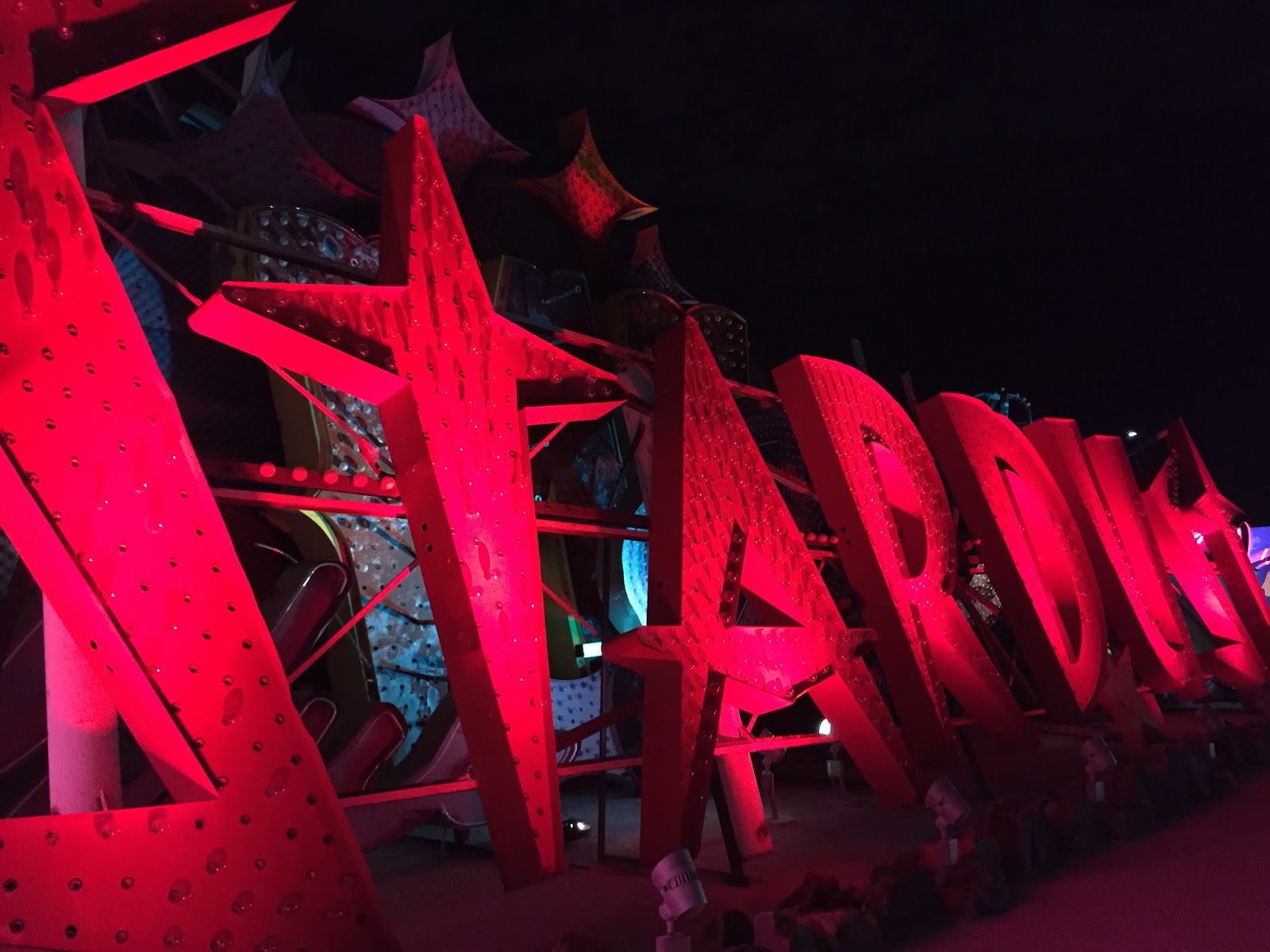
What happens when the lights go dark? In Las Vegas, several sets of lights go out every decade. In fact, one grand set of lights that lit up the Riviera just went out this year. Only a couple of months ago, you could still see the neon sign, ghostly dark with shadows and reflections from the lights of the other casinos nearby. Despite the command to pull the switch, bringing darkness, the Neon Museum is waiting nearby to offer a second chapter for those that faced the last curtain call. 

The glitz and glamour of  the Las Vegas strip is always tinged with a sense of déjà vu: As if you’ve seen the extravagance before, perhaps just around the previous corner, or in an old movie from decades ago. The glitter and lights have provided a backdrop of resplendent euphoria. Of course, this effect is intentional, to make you feel prosperous, beautiful, uninhibited, and timeless. But just as pockets empty and beauty fades with age, so too casinos fade in popularity and age tarnishes the shine of the flashing lights.
As a reminder of all that glitters is far from gold, the Neon Museum strives to preserve the essence of Las Vegas, from its early days to the present. With each casino that is shut down, the Museum is at the ready, hoping to secure a piece of the sign for their "boneyard." 

Over the years they have collected many remnants of neon artistry. Not many are in working order, but each comes with stories as big as the current towers of light still shining on the strip, just up the street. That was the first thing that caught my attention during our visit. Standing in the dark, waiting for the tour to start, and seeing the glow on the horizon from the current casinos that have risen up to take the place of the past signs we were about to see. A reflection of humanity and life itself that was too uncomfortable to speak out loud. Most waited in respectful silence, as if we were about to enter a cemetery.
Visitors are encouraged to purchase tickets well in advance as tours sell out quickly. But the tour choice is part of the experience. Tours can be taken during the day or during the night. As a Neon Museum, I figured the neon signs viewed at night would make for the best experience. In hindsight, I now realize either tour would have distinct advantages. While the night tour provides an atmospheric experience of echoes and shadows, the daytime tours would provide an artistic experience of mid-century modern marvels. Many of the signs on display are from the very era of Betty Willis’ famous “Welcome to Fabulous Las Vegas” sign that has become a timeless icon of this city: impressive in either the light of day or light of night.

The endeavor that evolved from a Neon Boneyard into a Neon Museum began very small and has grown significantly over a brief number of years. Still, the effort, talent, and resources necessary to bring darkened neon signage back to its glowing glory does not come easy. Each sign is unique in construct, and only shines again after a lengthy labor of love. This slow and costly process means their collection of broken signs vastly outnumbers their collection of brilliantly resurrected signs. 
During the night tour, visitors are guided through a maze of neon art. Sizes, colors, shapes, textures, and messages are as varied as the current array of signs seen on the 21st century strip. But time is always a variable, as evidenced by the patches of rust alongside the brilliant residue of paint and glass. Since Las Vegas is only a little over 100 years old, their earliest signs only go back to the 1930s and 40s. Not only do visitors experience the variance of light and color, but design and construction changes enhance the stories told by the guide. 
Celebrities, gangsters, and early restaurateurs provide the history, but the contours and shapes provide the visual record of 20th century sign making. As only a few of the signs have been restored to fully functional operation, the museum has chosen to light the signs and paths with colorful spotlights that create depth and atmosphere. The darkened shadows with hints of light and color truly echo a time past. Despite the name change from "boneyard" to "museum" there was a sense of cultural death, and many locals still refer to this place as the “boneyard.” Each decade of decadence has put its mark on this city in the form of massive light structures, meant to lure visitors with the promise of riches. But the riches are ethereal, rarely realized, and often out of reach. 
And yet, the lure is still alive. New signs replaced the old, and today’s lights are vastly bigger and brighter. As we walked along in the dark desert air, names of legendary casinos were spoken once again and visually represented by a small remnant of their neon luster: The Golden Nugget, The Silver Slipper, The Stardust, The Sahara, and an older version of Caesars Palace. Note the lack of an apostrophe. The guide reminded everyone that Caesars Palace is named in such a way as to declare that all visitors are wealthy Caesars and this is their Palace.
Each new decade strives to make the impact larger and more breathtaking than the previous, to lure more visitors, with even greater promises. At the Neon Museum, the echoes of past decadence are felt poignantly with each turn of the path. As a result, the beauty in this colorfully lit visage reminds us of the uniqueness of Las Vegas. Everyone comes to Las Vegas for the experience, regardless of what we win or lose here. It is a special place unlike any other, and purely an American mirage built out of the desert. 

P.S. The museum is currently raising funds to restore its newest acquisition, The Desert Rose. They have one week left to reach their ambitious goal! Please consider donating to this groovy cause! 

Monday, December 1, 2014

History Synergy in Cynthiana

Last week, I was witness to something extraordinary in Cynthiana's City Hall. With my previous post, Death of a National Landmark, I outlined the sorry state of our efforts to save Ridgeway, aka, the Handy House. With one vote cast for demolition by the Fiscal Court, we were one vote away from making that order a reality with the meeting of the City Commissioners. If they had voted to agree with the Fiscal Court, demolition would soon take place. But something magical happened on Tuesday that halted such action for the time being. Just note that phrase: "for the time being." The fight is by no means over as the motion that carried only tabled any decision. At some point, a vote and motion will be passed, but we still do not know what that yet might be. We remain cautiously optimistic for Ridgeway, but tremendously hopeful about the state of history/preservation activism in Kentucky!

When the word was spread via word of mouth, social media, local and state press, people got fired up. Locals, regional parties, state officials and national friends joined together to fight for this 200 year old treasure. According to one City Commissioner that night, support was pouring in from all over the country, asking them to save the house for the future generations, and for the nation. Those voices of support made a difference and will live on forever in the annals of history as an example of synergistic activism in the fields of history and preservation.

The most remarkable aspect of the movement surrounding the salvation of Ridgeway was the diversity of age. As the meeting was set to take place, people kept filing into the Commissioners room until there was standing room only. To our delight, the age range of those attending and willing to speak in favor of saving the house stretched across the spectrum. The number of young people involved and in attendance was so encouraging! We are constantly bombarded with statistics and reports about how the younger generations are not as motivated when it comes to history and heritage, but this meeting proved all of that wrong.

To see the various voices step to the podium - from state officials, to local activists and concerned citizens, to descendants of the builder, and to state activists such as Griffin VanMeter - the passion and energy in the room was contagious and exhilarating! By the time everyone had expressed their support - including City Commissioner and Rohs Opera House owner, Roger Slade - folks were hooping it up and hollering for history. When those passionate about saving history have to be shushed by the Mayor, it's a good day!

So far, the motion to table the vote could be temporary. We have not been notified when a vote might come up on the agenda next - and could be as early as next week. However, a couple of things did happen that evening: The HCHC is still pressing for a vote to lease the property to them, allowing them to get started restoring the house. Griffin VanMeter from Kentucky for Kentucky spoke and offered to purchase the property to begin restoration. Many voiced their support through letters, calls, and a line to the podium. It was a beautiful thing - but we have a long way to go. As of the next morning, one of the Commissioners called the HCHC to encourage them to purchase the property instead of Mr.VanMeter, simply to keep the house in the hands of a non-profit group.

As of today, the Lexington Herald-Leader is reporting that several local officials are in favor of the HCHC purchasing the property, but only if we relocate the house out of the park. Personally - not my vote. Relocation is a bad idea, but negotiations have not yet begun. If you didn't get to express your support in saving the house - you still have time to do so and encourage others to follow suit!

Sending a big THANK YOU to those who got involved and voiced your opinion! It truly made a difference last Tuesday! Hopefully the support will continue and we will succeed in saving this treasure!

Monday, November 17, 2014

Death of a National Landmark

For one last opportunity to help save this national landmark, please contact local Cynthiana officials! For more info about the house: friendsofridgeway.org
Cynthiana Board of Commissions: (859) 234-7150 
Cynthiana Fiscal Court: 859-234-7136 or hcjudge@harrisoncountyfiscalcourt.com  
Representative Tom McKee: Tom.McKee@lrc.ky.gov  or (859) 234-5879 

On Veterans Day, the Cynthiana Fiscal Court chose to ‘honor’ the memory of one of its most prominent Veterans by voting to demolish his residence, Ridgeway (aka The Handy House), just 3 years shy of its 200th birthday. For those of you who wanted a pool to be built in the place of this national historic treasure, congratulations, you have quite a victory on your hands. Since there is no money to construct a pool, and since the demolition of a house on the National Register removes the possibility of federal money helping in said construction (or completion of the park), you will be the proud new owners of a hole in the ground – with only the memory of the opportunity and heritage that just slipped through your fingers.

Out of all the wonderful memories I have of Cynthiana from my childhood, none quite compare to the recent memories I have of Cynthiana’s people, fighting to save one of the most important pieces of history left in the community. I watched dedication and love of community in action. Years of tireless work, acts of love, in the vain hopes of preserving a piece of our heritage to pass on to future generations.

With each temporary victory, political winds would blow once again, pressuring those who gave an oath to preserve history until they violated said oath and gave up the hard won victory before its allocated time was fulfilled. Despite the 2000+ signatures of community members expressing their support, and despite the thousands of dollars continually raised to save the house, those who wanted a pool had a more powerful voice, sometimes whispered in the right ears instead of expressed outwardly in open dialog.

As I cherish the memories of new friends made, and proud moments witnessed, there are a few memories I will gladly try to forget: the easy disregard for historically significant properties expressed by a few local officials, and the sarcastic comments of a county magistrate who was of the opinion that we should just pick another house to “waste” our time and efforts on – namely his house – as he thought this was just another “Money Pit” waiting to happen - Despite the fact that no city or county money was to be used for restoration. Well, I have an answer for that comment made out of ignorance: history and the heritage of a community are not interchangeable nor fabricated. They are tangible elements of a community’s narrative that we, as wise stewards, have a responsibility to preserve for the future generations.

Just what kind of history is Cynthiana voting to erase? The kind that solidifies its place of prominence among our statewide and national histories. When we point to significant accomplishments of this community, should we forget the earliest foundations of pioneer accomplishments? The same foundation that built educational institutions, fought to keep our independence, governed through the Missouri Compromise, built an agricultural success story that inspired a new generation of pioneers that traveled west. From these accomplishments grew a struggle with slavery, freedom, more war, a split state, and an indelible connection to one of the most beloved Presidents of U.S. history.

When our students learn about the Civil War, and they read the words spoken by Lincoln: “I think to lose Kentucky is nearly the same as to lose the whole game” (1861), will Cynthiana students be taught about their community’s connection to this important moment in U.S. history – Lincoln writing them to a native Cynthiana boy from Ridgeway? Wouldn't it have been a remarkable lesson learned if they could walk the hill up to a restored and beautiful landmark in their community, and could proudly point to it as evidence of Cynthiana’s rightful place in our national history? Sadly, that opportunity has passed. But hey, maybe in a decade or so, some of the kids of the community might be able to go swimming, and isn't that more important anyway?

For those of you who have not followed this issue with rapt attention: Despite the house’s cosmetic appearance, it was inspected and deemed structurally sound by a top Cincinnati architect. After producing a sound business plan by real estate developer and Brown descendant, as requested, and as favorably received in late July by both the Fiscal Court and City Commission, the finances necessary to restore the house were within grasp. Since the house was placed on the National Register of Historic Places in 2005, simply allowing interested parties to raise the money for restoration, federal funding opportunities would be available for the park’s completion. However, this disgraceful decision by the Fiscal Court has denied the future generations a national historic treasure in their community they can look upon proudly, a new community space which has been greatly needed, and a completed park they were promised over a decade ago. The plan proposed was a sound one and a benefit to all in the community as it also included provisions for the pool next to the house. Now that this landmark is passing, just how many 200 year old structures with city, statewide, and national prominence do you have in Cynthiana to make this one obsolete?

Raising a glass in final farewell to a great and beautiful monument of history not worthy of a community not willing to allow able hands to save it within the proposed few years. “The most effective way to destroy people is to deny and obliterate their own understanding of their history.” ― George Orwell

ShareThis

Related Posts Plugin for WordPress, Blogger...
 

Designed by Simply Fabulous Blogger Templates